0 – 1 m Soil
Topsoil
Soil in Kullu is usually half a metre to a metre deep. The rig's foot clamp sits on it; the first metre goes quickly.
Bhunter · Kullu · Himachal Pradesh
ठाकुर बोरवेल वर्क्स
Borewells for homes, hotels, farms and sites across Kullu — 4″ to 8″ bores, down to 200–250 metres.
Under a Kullu site
No two sites are the same. This is the kind of ground the Kullu valley is made of — from the Central Ground Water Board's report on the district — and what happens in each layer.
0 – 1 m Soil
Soil in Kullu is usually half a metre to a metre deep. The rig's foot clamp sits on it; the first metre goes quickly.
Layers and depths are an illustration based on CGWB, Ground Water Information Booklet, Kullu District (2013) — not a survey of your site.
Bore sizes
A bore's diameter is chosen for what the well must supply — and for the pump and casing that will go into it.
Drawn to scale against each other
5″ bore
≈ 127 mm across
A practical size for residential, commercial and agricultural use.
The final size is chosen for your site's conditions, the water you need and the pump and casing system.
Ask which size fitsThe machine
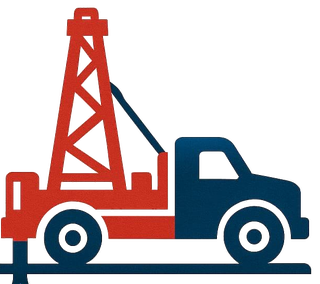
This is the kind of truck-mounted DTH rig that drills the valley's borewells — and the tools that go down the hole. Tap a number, or grab a part and pull it out.
01
मास्ट
The tower the drilling happens on. It travels lying over the deck; on site a hydraulic cylinder stands it up at the tail and it is lowered onto the ground.
Drawings of a typical Indian truck-mounted DTH rig — not the engineering plans of a particular machine.
Narrow lanes, steep plots, a field below the road: where the truck can't go, our portable rig is brought in and set up on its own steel frame. Screw jacks on blocks hold it level and still, the rotary head rides a chain-fed mast, and hydraulic hoses bring the power. It drills down to 100 metres.
Ask if we can reach your siteWhy call us
How a job runs
We see the location, the access for the rig and what you need the water for — before any work begins.
Bore diameter and drilling are decided for the intended use and the conditions at the site.
Drilling with the right equipment and technique for the ground we meet at your site.
Where needed, casing is set to support the bore and stop unstable ground from collapsing.
The bore can be cleaned and developed after drilling to clear debris and improve the flow of water.
A submersible pump can be chosen for the finished bore's conditions and your water requirement.
On site
Our own rig, our own crew — on the valley floor and up the terraces.
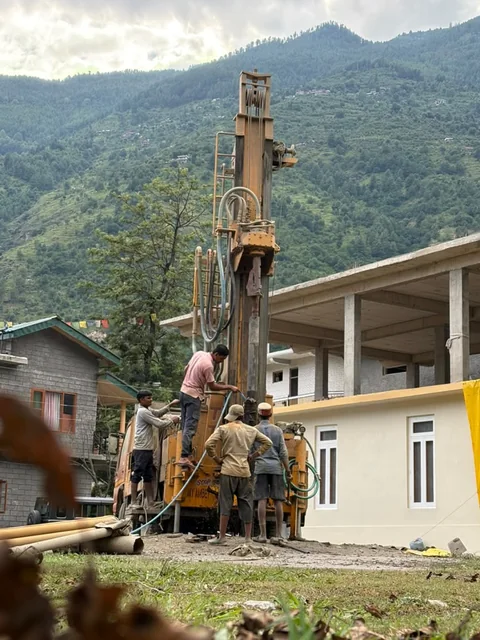
Mast up, the crew at the rods, terraced hills behind.
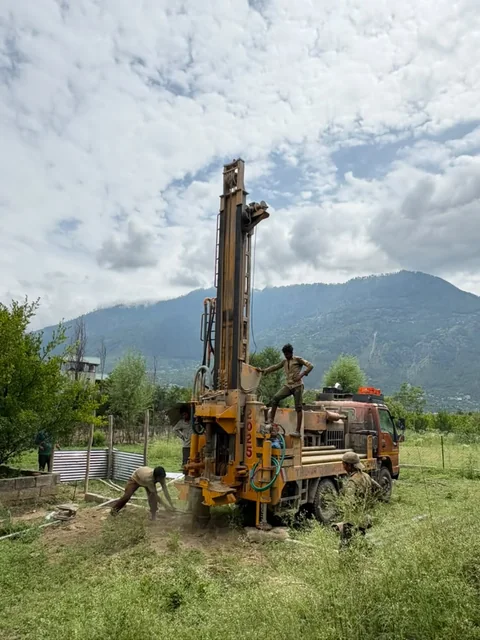
Under the ridges, a man on the deck watching the head.
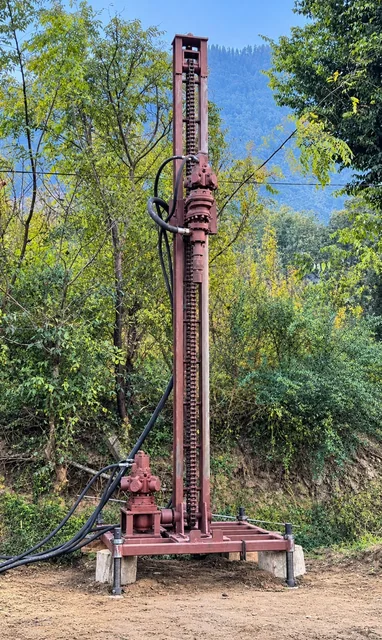
The portable rig on screw jacks and blocks, mast up.
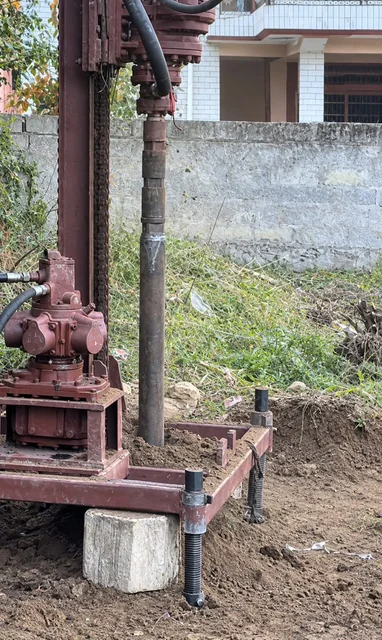
The rod going down through the frame.
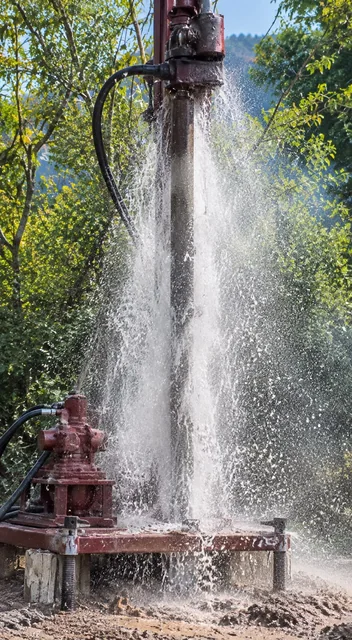
Water coming up around the rod.
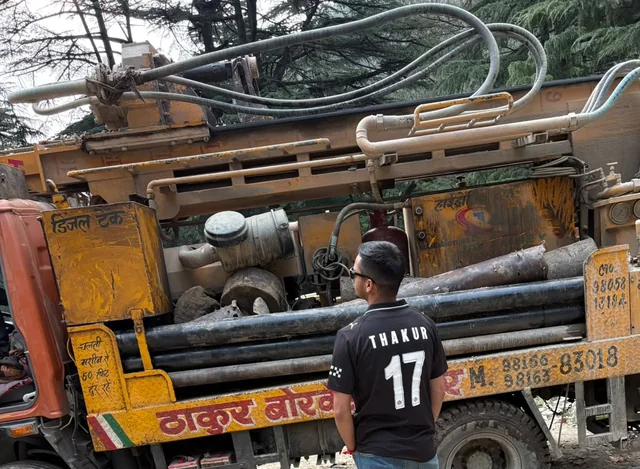
The diesel tank, rods racked down the side, hydraulic hoses over the top.
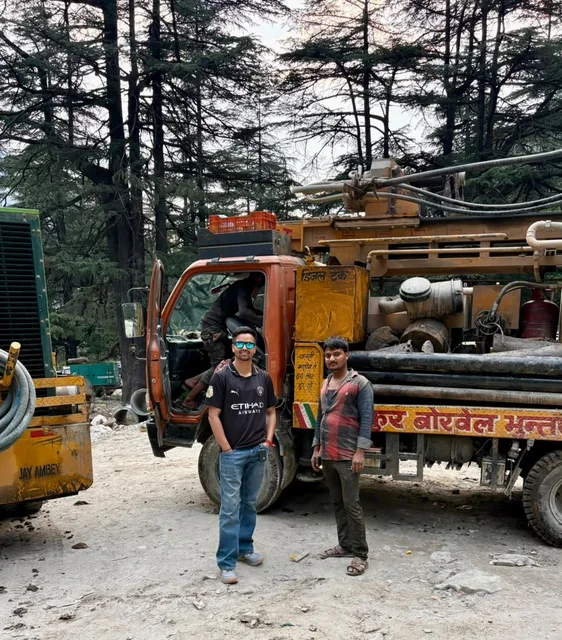
Our rig and our team, parked under the deodars.
Our own clips, straight from the rig.
4, 5, 6, 7 and 8-inch borewells.
It depends on the ground and the groundwater at your site — there is no single depth that applies everywhere. Our truck-mounted rig drills vertically to around 200–250 metres; the portable rig to 100 metres.
Yes. Borewells for homes and farmhouses are among the work we do.
Yes — hotels, resorts, homestays, shops, commercial buildings, institutions and construction sites.
No. No drilling company can honestly guarantee groundwater at every site — it depends on what is under the ground. We tell you what we see before we start.
Yes. The pump is chosen for the finished bore's depth, water level and yield.
Yes. Along with our truck-mounted rig we have a portable rig for hill sites with narrow or no road access — it drills up to 100 metres.
Call or WhatsApp either number: 98058-13194 or 98166-83018.
Yes — Thakur Borewell Works is registered with the government.
The whole state is notified under the HP Ground Water Act. Homes register their well (free); hotels and other users apply for a permit first. See the Himachal rules page for the details and sources.
Site enquiry
Where the site is, what the water is for, and whether the rig truck can reach it. We call you back — or send it on WhatsApp.