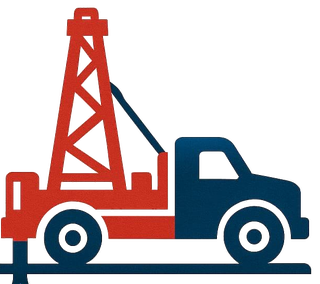
Truck-mounted DTH rig
The machine
मशीन
A truck, a mast, a compressor and a hammer at the bottom of the hole. Here is what each part does.
- Drawing
- Truck-mounted DTH borewell rig
- Rated to
- 0m
- By
- Thakur Borewell Works
- Note
- Drawn for this site — not to scale
The machine
A rig, taken apart
This is the kind of truck-mounted DTH rig that drills the valley's borewells — and the tools that go down the hole. Tap a number, or grab a part and pull it out.
- 01
Mast · मास्ट
The tower the drilling happens on. It travels lying over the deck; on site a hydraulic cylinder stands it up at the tail and it is lowered onto the ground.
- 02
Rotary head · रोटरी हेड
Rides up and down the mast, turning the drill rods and pushing them down. Hydraulic motors drive it through a gearbox.
- 03
Lift cylinder · सिलेंडर
The hydraulic ram that raises the mast off the deck — and lowers it again for the road.
- 04
Control levers · कंट्रोल
The driller's station at the tail of the rig: levers for the head, the mast and the jacks, and gauges to read the machine.
- 05
Hydraulic tank · हाइड्रोलिक टैंक
Oil for the hydraulics that move the head, the mast and the jacks.
- 06
Engine and pumps · इंजन
The diesel engine that drives the hydraulic pumps for the head, the mast and the jacks.
- 07
Diesel tank · डीज़ल टैंक
Fuel for a long day on site — the tank painted on the side of the rig.
- 08
Drill rods · रॉड
Steel pipes racked along the deck. One is screwed on after another as the hole goes deeper; they carry the turning force and the air down to the hammer.
- 09
Levelling jacks · जैक
Hydraulic legs that take the rig's weight off its wheels and hold it level and still while it drills.
- 10
Foot clamp · क्लैंप
At the foot of the mast: holds the rods while one is added or taken off.
- 11
The truck · गाड़ी
The rig is built on a truck so it can climb hill roads to the site. Where no truck can reach, our portable rig goes instead.
- 12
Air compressor · कम्प्रेसर
Parked beside the rig. It sends high-pressure air down the rods to drive the hammer and blow the cuttings — and, at the end, the water — out of the hole.
- 13
DTH hammer · हैमर
Down-the-hole hammer: it sits right behind the bit at the bottom of the hole, where a piston driven by the air strikes the bit again and again while the rods turn it.
- 14
Button bit · बिट
The cutting end. Tungsten-carbide buttons crush the rock with every blow; grooves let the air carry the chips up.
- 15
The bit, from below · बिट का मुँह
The face that meets the rock: carbide buttons in rings, and the holes the air comes out of.
- 16
Casing pipe · केसिंग पाइप
Pipe set in the top of the hole where the ground is loose — through soil and boulders — so it cannot cave in.
- 17
Submersible pump · सबमर्सिबल पंप
Once the bore is finished and cleaned, a pump is chosen for its depth, water level and yield, and lowered into it.
- 18
One drill rod · एक रॉड
Threaded at both ends; the joint is where the next rod screws on.
Drawings of a typical Indian truck-mounted DTH rig — not the engineering plans of a particular machine.
Our portable rig
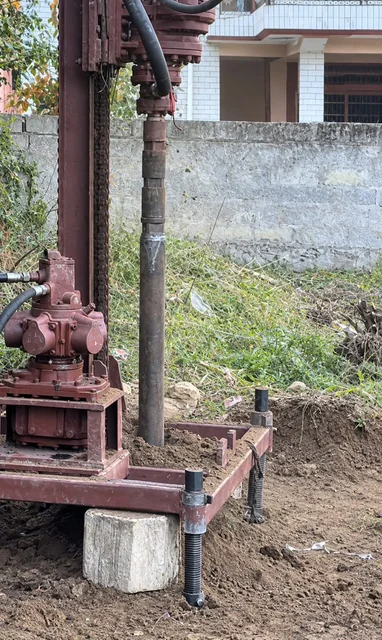
The same job without the truck. The rig stands on its own steel frame, levelled by screw jacks on blocks, so it can be set up on a narrow or uneven plot. The rotary head rides a chain-fed mast and turns the rod down through the frame; hydraulic hoses bring the power. It drills to 100 metres.
Most of India's rigs come from one town
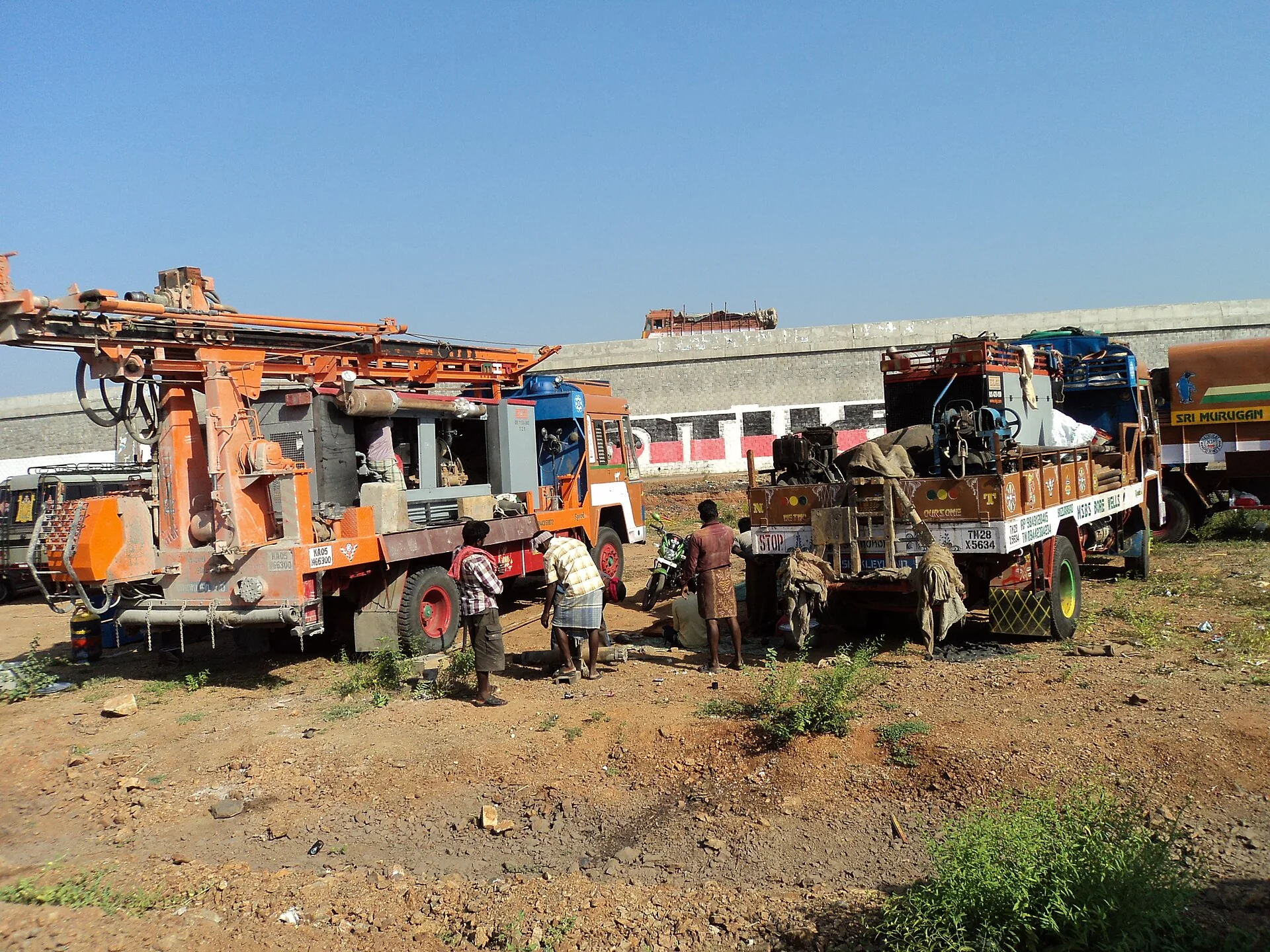
Borewell rig lorries are built in great numbers in Tiruchengode, in Namakkal district, Tamil Nadu — the town builds most of the rig vehicles working across India. A rig on a truck is how India drills: it drives to the site, stands its mast up at the tail and drives on to the next one.
Two lorries, one job
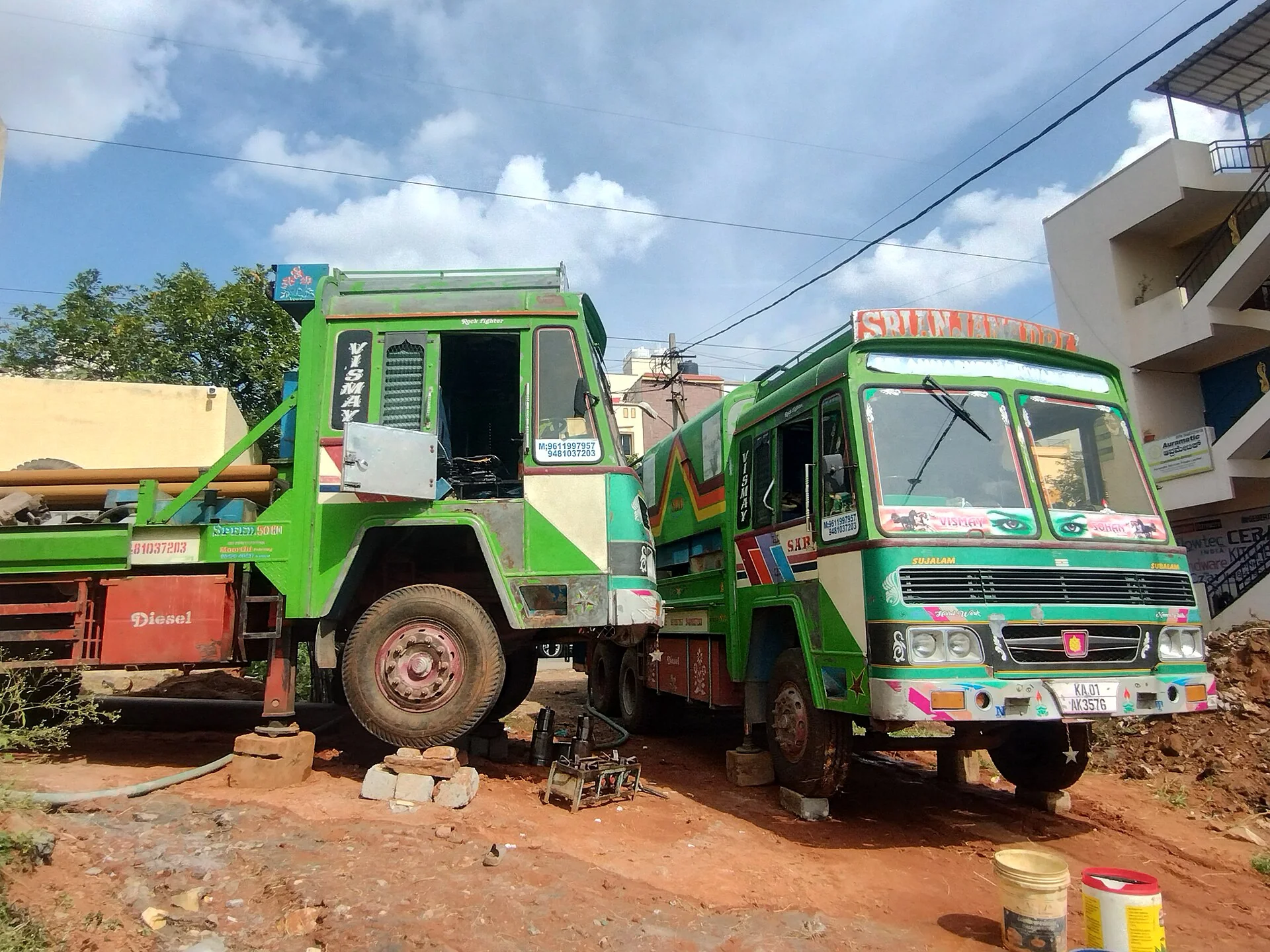
A DTH rig needs a big air compressor, and in India it often travels on a second lorry that parks beside the rig, a thick hose running to the rotary head. The air drives the hammer at the bottom of the hole and carries the crushed rock up and out. On site both stand on their jacks, wheels off the ground.
Why a drilling site turns grey
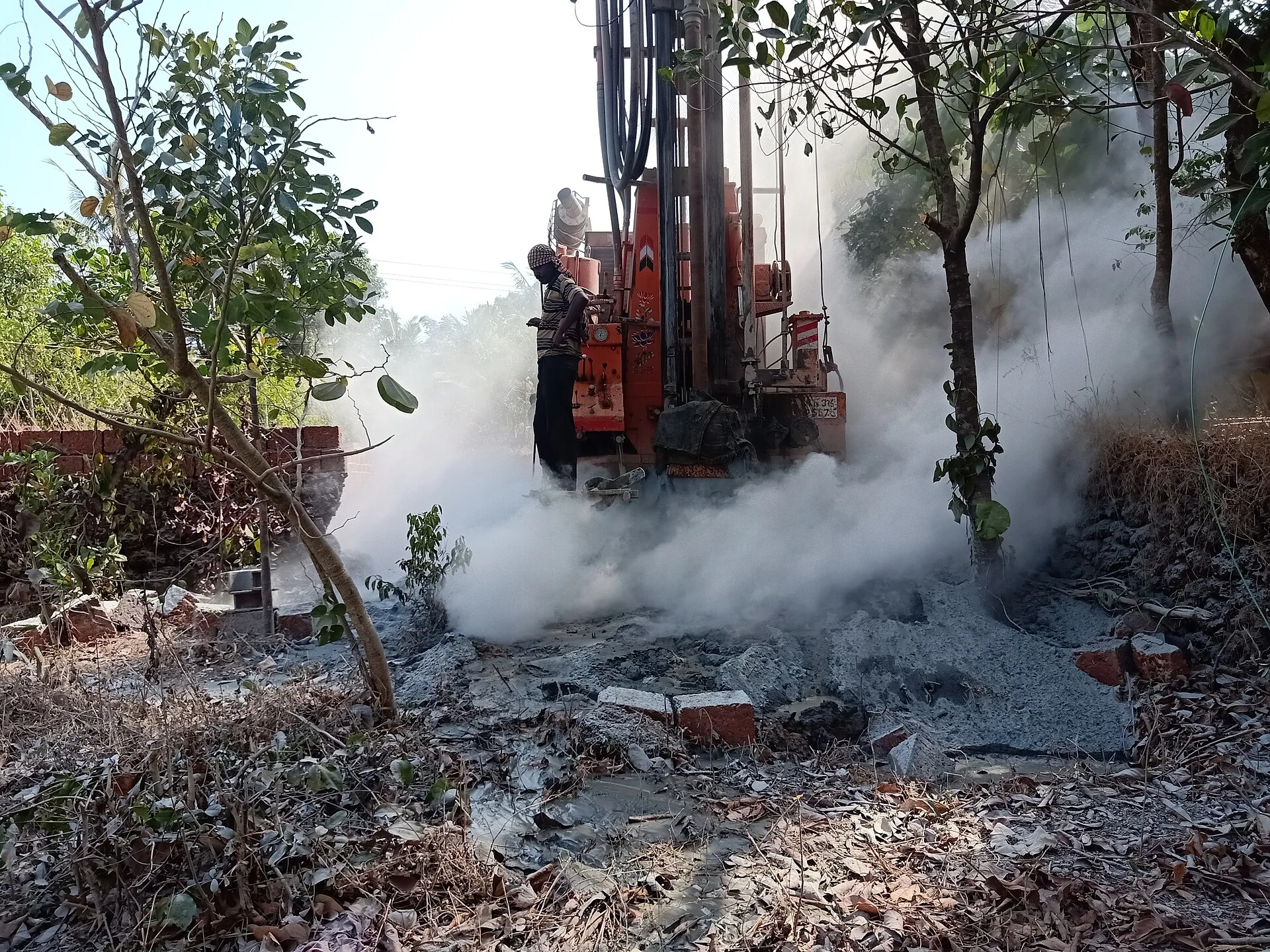
While the hammer is in dry rock, the air blows the crushed rock out of the hole as dust — the cloud you see over a site. When the bit reaches water, the dust turns into a fountain of muddy water.
Soft ground, hard rock, loose boulders
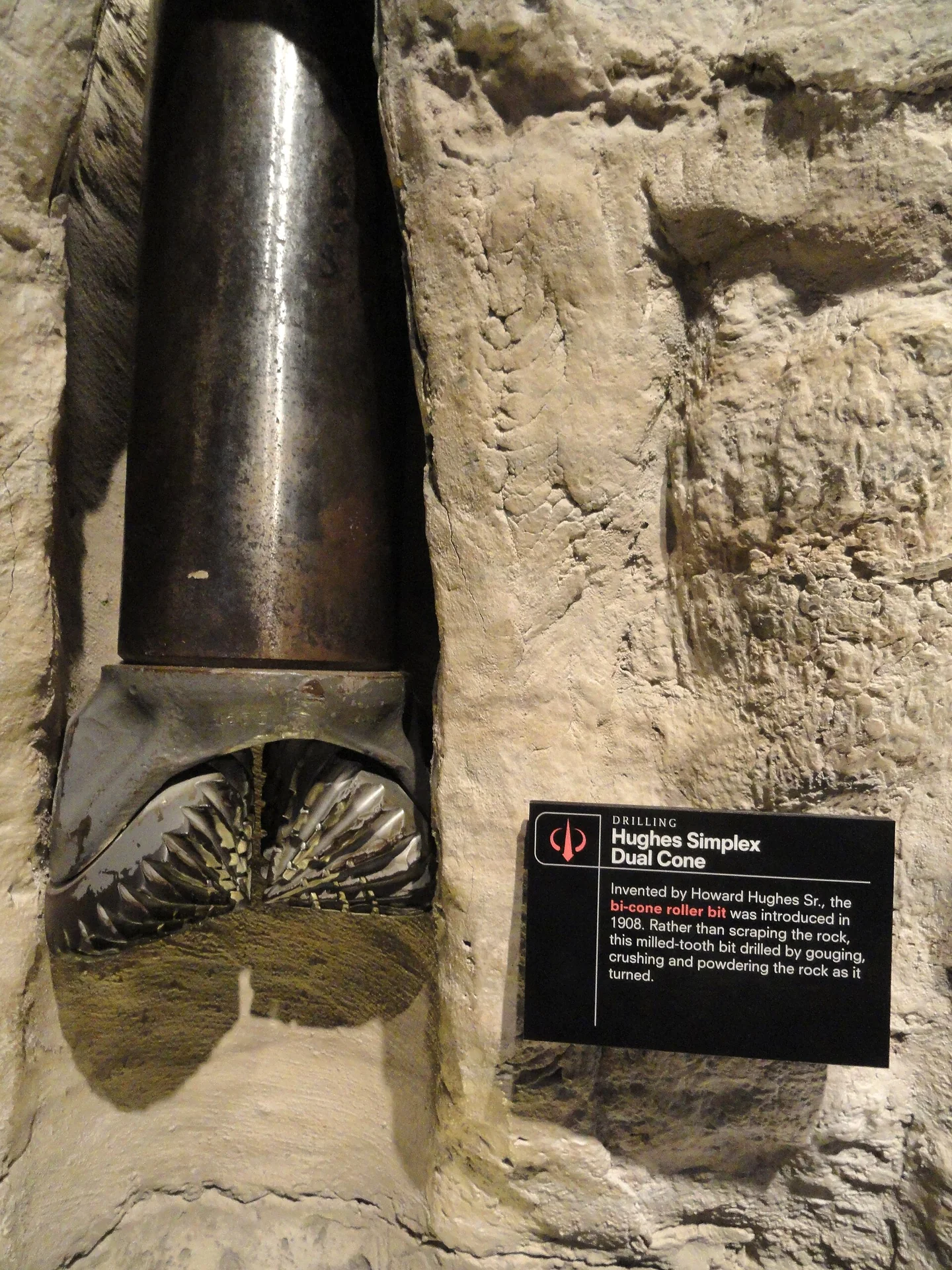
In soft ground a rig can drill by rotation alone with a roller-cone bit. In hard rock the DTH hammer does the work. Through loose boulders — common on river terraces — the hole is cased as it goes so it cannot cave in; casing-advance systems such as ODEX pull the casing down right behind the bit.
Across India
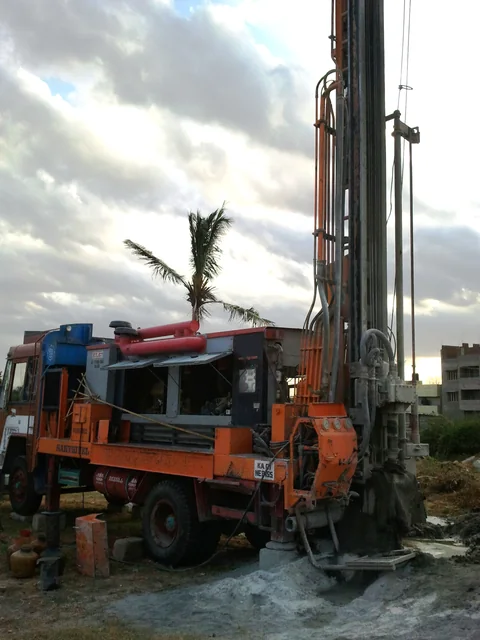
Rig lorries at work
- Bengaluru
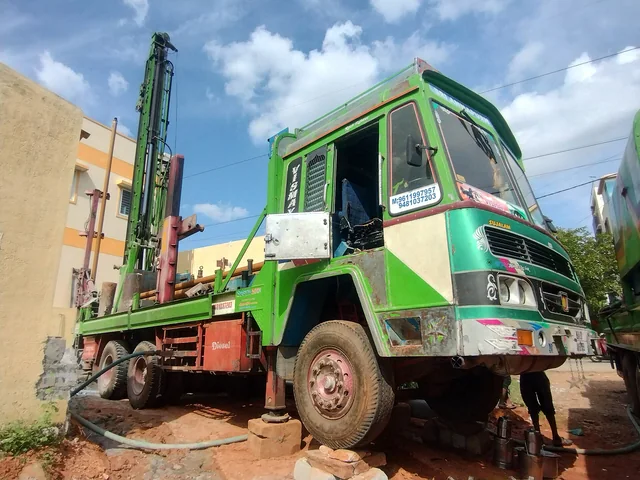
Up on its jacks, mast raised
Photo: Gpkp · CC BY-SA 4.0 · Wikimedia Commons
- India
Water coming up
Photo: Amrith Raj · CC BY-SA 3.0 · Wikimedia Commons
- At the collar
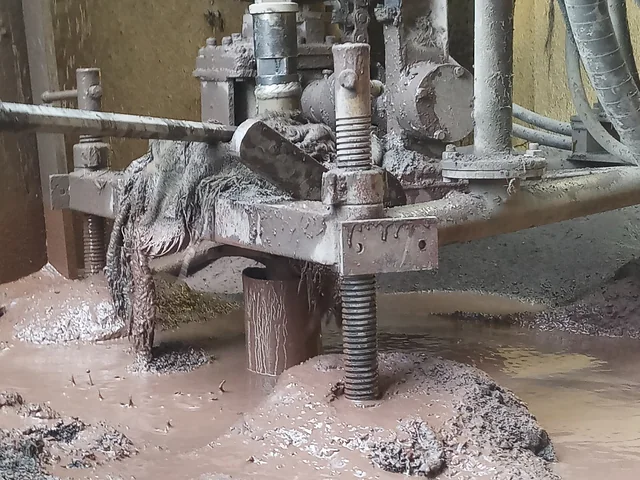
Slurry round the pipe
Photo: Savvywriter · CC BY-SA 4.0 · Wikimedia Commons
Site enquiry
Need a borewell?
Where the site is, what the water is for, and whether the rig truck can reach it. We call you back — or send it on WhatsApp.
- We talkAbout the site, the water you need and the bore size.
- We see the siteAccess for the rig, the ground, nearby borewells.
- We drillDrilling, casing where needed, cleaning — and a pump if you want one.
- Call
- 98058-13194
- Based in
- Bhunter, Kullu, Himachal Pradesh